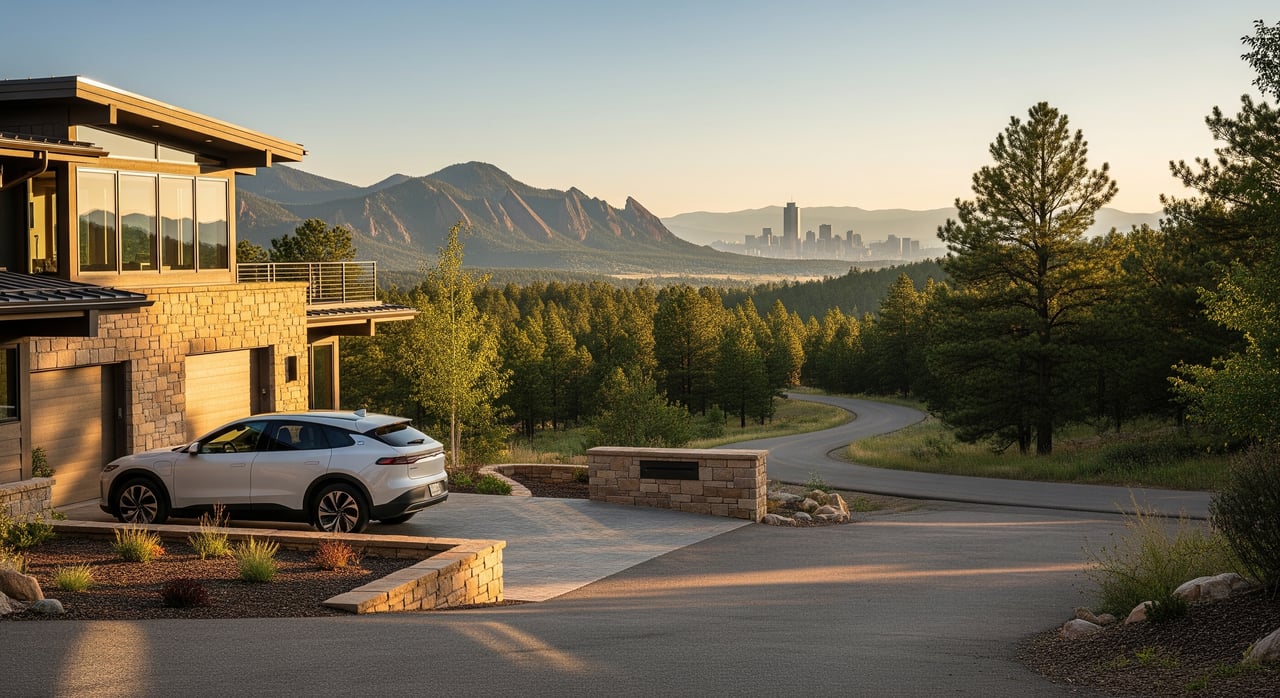
Wondering whether Boulder or Longmont will make your Pinewood Springs commute smoother? When you live in the foothills, the daily drive shapes your routine, budget, and peace of mind. You want reliable times, safe routes in winter, and easy access to errands without losing the mountain lifestyle you love. This guide breaks down routes, real-world drive times, winter impacts, and day-to-day living patterns so you can choose confidently. Let’s dive in.
Routes at a glance
Pinewood Springs to Lyons
Almost every trip starts with a downhill drive from Pinewood Springs into Lyons. This first stretch includes winding, local mountain roads and a quick canyon descent. Once you reach the valley, you can choose your corridor toward Boulder or Longmont.
From Lyons to Boulder
Heading toward Boulder takes you east into the Boulder metro area. This is the typical path for university, tech, and R&D jobs, and for destinations along major Boulder corridors. Expect more consistent congestion near central Boulder during peak hours.
From Lyons to Longmont
Turning toward Longmont takes you east and northeast to business parks, healthcare hubs, and broader retail. You can also connect toward US‑287 and the northern I‑25 corridor. Peak traffic can slow the Main Street approach and key intersections in central Longmont.
Drive times you can expect
Typical ranges
Plan for roughly 30 to 50 minutes one way to central Boulder under normal, non-winter conditions. Plan for roughly 35 to 55 minutes one way to central Longmont under similar conditions. Exact times vary with your specific destination, traffic, and departure time.
Peak-hour patterns
Morning and evening peaks, roughly 7 to 9 AM and 4 to 6 PM, add time in both directions. Approaches into downtown Boulder often see heavier, sustained congestion. Longmont’s Main Street corridor can also slow during peak periods.
Weekend and seasonal swings
Summer and fall weekends bring tourist traffic through Lyons toward Estes Park, which can back up valley corridors. Friday evening and midday weekend travel often see the biggest delays. Construction projects on canyon approaches or valley highways can add recurring delays in warmer months, so it pays to check schedules.
Winter realities
Road maintenance basics
Local mountain and canyon roads are typically maintained by county or local authorities. Once you reach Lyons, state highways get higher priority plowing. Service levels on local mountain roads can lag during heavy snow, so clearing may take longer than in the valley.
How storms change your day
Winter storms can increase one-way commute times by 50 to 100 percent or more. Shaded canyon sections hold ice longer and can form black ice, especially in low-sun spots. In severe weather, some routes may be temporarily impassable or require traction devices.
Vehicle and prep checklist
- Choose all‑wheel drive or 4WD if possible, and pair it with quality winter tires for better braking and traction.
- Keep a winter kit: small shovel, traction aids, blankets, water, snacks, phone charger, flashlight, and extra warm clothing.
- Build buffer time into your schedule, consider flexible hours or remote work during storms, and check real-time road and weather alerts before leaving.
Everyday life: errands and services
Lyons for quick stops
Lyons is the first-stop hub for coffee, local restaurants, small-market groceries, hardware, and household essentials. You can handle many quick errands here without committing to a full day in town. Basic medical and urgent care options may be available, while specialty care usually means a trip to Boulder or Longmont.
Longmont for full-service needs
Longmont offers larger supermarkets, national retail, and a wide range of healthcare services, including hospital capacity and specialist providers. You will find more choices for everyday shopping and family services. Dining ranges from local breweries to farm-to-table restaurants and community venues.
Boulder for specialty and culture
Boulder provides premium grocery options, international and health-focused markets, and a dense restaurant scene. Cultural events, theaters, and outdoor access points offer variety for evenings and weekends. Many residents tie Boulder trips to specialty shopping or entertainment.
Common weekly patterns
Many Pinewood Springs residents do quick top-ups in Lyons during the week. They handle major grocery and big-box shopping in Longmont, often once or twice a month. Specialty errands and nights out tend to happen in Boulder, especially for those working there.
Which city fits your routine?
When Boulder makes sense
Choose Boulder if your job is near central employment areas or you value frequent access to specialty dining and cultural events. You will likely see more peak congestion but shorter trips to many Boulder employers. Transit connections toward the Denver corridor are also stronger from Boulder compared with smaller towns.
When Longmont fits better
Pick Longmont if you want broader retail choices, regular access to healthcare services, and connections to northern Front Range employment centers. Commute times can be comparable to Boulder depending on your exact destination. Many residents find Longmont more convenient for recurring errands.
Questions to decide
- Where is your workplace, including the exact address and parking?
- How sensitive are you to daily variability in travel time?
- Are you comfortable with winter driving, and do you have the right vehicle and tires?
- How often do you run major errands versus relying on small local shops?
- How important are specialty shopping, restaurants, and cultural events in your weekly routine?
Try the commute and plan ahead
Before you commit, test the drive in both directions during morning and evening peaks. If possible, simulate a winter trip to see how the mountain-to-valley transition feels. Confirm broadband and cellular coverage at any property you are considering, especially if you work remotely.
Use this practical checklist to dial in your plan:
- Drive both commutes during peak hours and once off-peak.
- Do a winter-condition test if timing allows.
- Ask about typical snow-clearing times on the local access road and any recent slide or erosion work.
- Verify school catchment areas and bus routes if applicable.
- Confirm internet reliability for remote or hybrid work.
- Consider vehicle costs, winter tire wear, and whether a second winter-capable car is needed.
- Map nearest hospital, urgent care, and towing or recovery services.
Ready to compare properties with real-world commute and lifestyle trade-offs in mind? Our team lives and works in these mountains and the adjacent Front Range, and we are here to help you evaluate routes, seasons, and daily living patterns alongside the home itself. Start the conversation with Alpine Legacy.
FAQs
How long is the commute from Pinewood Springs to Boulder or Longmont?
- Expect roughly 30 to 50 minutes one way to central Boulder and 35 to 55 minutes to central Longmont under typical, non-winter conditions.
How does winter affect Pinewood Springs commutes?
- Storms can add 50 to 100 percent or more to one-way times, and in severe weather some routes may be delayed or briefly impassable until cleared.
Are there transit options from Pinewood Springs to Boulder or Longmont?
- Public transit exists but is limited compared with urban cores, and routes or connections can add significant total travel time for most commuters.
Where do Pinewood Springs residents usually shop for groceries?
- Many handle quick purchases in Lyons, do major grocery and big-box runs in Longmont, and make occasional specialty trips to Boulder.
What vehicle setup is best for winter driving near Pinewood Springs?
- All‑wheel drive or 4WD paired with quality winter tires is recommended, along with a basic winter kit and extra buffer time during storms.